


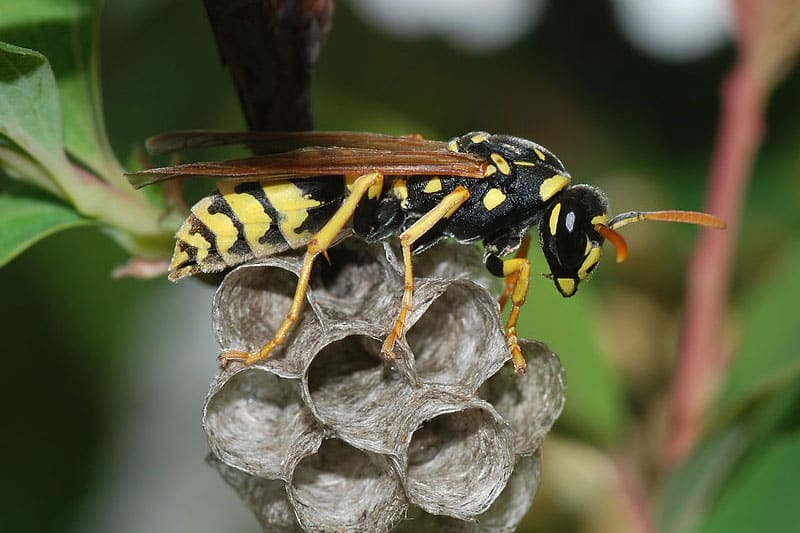
Wasps in the Spring: Why Early Pest Control Is Critical in the Pacific Northwest
As winter fades and temperatures begin to rise, most homeowners focus on yard work, home projects, and enjoying longer days. But spring also signals the beginning of wasp season.
In the Pacific Northwest, early spring is when wasp queens emerge from hibernation and begin building new colonies. While activity may seem minimal at first, what starts as one queen in March can become hundreds of aggressive wasps by mid-summer.
Understanding how spring wasp activity works — and why early professional pest control matters — can help protect your home, your family, and your outdoor spaces.
Why Wasps Become Active in the Spring
Spring is the foundation of the entire wasp season.
During winter, only fertilized queens survive. They overwinter in protected areas like:
- Bark crevices
- Attics
- Sheds
- Under siding
- Crawl spaces
When temperatures consistently warm, queens emerge and begin the process of establishing a brand-new colony.
Common species in the Pacific Northwest include:
- German yellowjacket
- European paper wasp
Each queen:
- Finds a protected nesting location
- Builds a small starter nest
- Lays the first batch of eggs
- Raises the first generation of workers
At this early stage, nests are small — often no larger than a golf ball — and significantly easier to treat.
Why Spring Is the Best Time for Wasp Control
Many homeowners don’t think about wasps until summer barbecues are interrupted by aggressive swarms. However, by that point, colonies are already well established.
Here’s why spring is ideal:
1. Colonies Are Still Small
Early nests contain only a queen and developing larvae. Eliminating a nest now prevents exponential growth later.
2. Reduced Aggression
In spring, there are no large worker populations defending the nest. This lowers risk during treatment.
3. Prevent Future Infestations
Stopping a nest early prevents hundreds of workers from developing and potentially creating satellite nests nearby.
Where Wasps Commonly Nest Around Homes
In the Pacific Northwest’s moisture-rich climate, wasps seek dry, protected areas close to food sources.
Common nesting areas include:
- Under roof eaves
- Inside attic vents
- Wall voids
- Crawl spaces
- Shrubs and bushes
- Underground cavities (common with yellowjackets)
The German yellowjacket is especially known for nesting underground or inside wall voids, making infestations harder to detect until activity increases.
The Risks of Ignoring Spring Wasp Activity
Wasps are more than a nuisance — they pose legitimate safety concerns.
Multiple Stings
Unlike bees, yellowjackets can sting repeatedly. This makes them more dangerous, especially in defensive situations.
Aggressive Nest Defense
As colonies grow, wasps become highly protective. Simple activities like mowing, trimming hedges, or even walking near a nest can trigger attacks.
Allergy Risks
For individuals with sting allergies, even one encounter can result in severe reactions requiring emergency medical attention.
Property Concerns
Large nests inside wall voids or attic spaces can require more invasive removal later in the season.
Why Professional Pest Control Is the Smart Choice
While DIY sprays may seem convenient, wasp control is one of the most dangerous pest control tasks for homeowners.
Professional pest control provides:
Accurate Identification
Different species behave differently. Proper identification ensures the correct treatment approach.
Safe Removal
Trained technicians use protective equipment and targeted treatments to eliminate nests safely.
Queen Elimination
Simply knocking down a nest without eliminating the queen can allow the colony to rebuild.
Preventative Treatments
Professionals can:
- Treat high-risk nesting zones
- Seal structural gaps
- Apply seasonal deterrents
- Monitor ongoing activity
The Long-Term Benefits of Spring Prevention
Addressing wasp activity early in the season:
- Prevents large summer colonies
- Reduces sting risk
- Protects children and pets
- Saves money on more complex removals later
- Keeps outdoor spaces enjoyable
Spring prevention is proactive protection.
Signs You May Have a Spring Wasp Problem
Call for inspection if you notice:
- A single wasp repeatedly flying to the same location
- Small papery nests under eaves
- Increased wasp activity near shrubs
- Wasps entering siding gaps or vents
- Activity near ground holes
Early intervention makes removal faster, safer, and more affordable.
Protect Your Home For Spring and Summer
In the Pacific Northwest, spring is the most strategic time to control wasps. Waiting until summer often means dealing with larger, more aggressive colonies.
One queen in early spring can become hundreds of wasps by July.
Professional pest control ensures:
- Safe nest removal
- Long-term prevention
- Reduced sting risks
- Peace of mind for your family
Don’t wait for wasps to take over your yard.
Schedule a spring inspection today and stop the problem before it grows.

